Smart cities in Muscat: an investment with increasing value
2026-07-27
1,021 common.blog.views
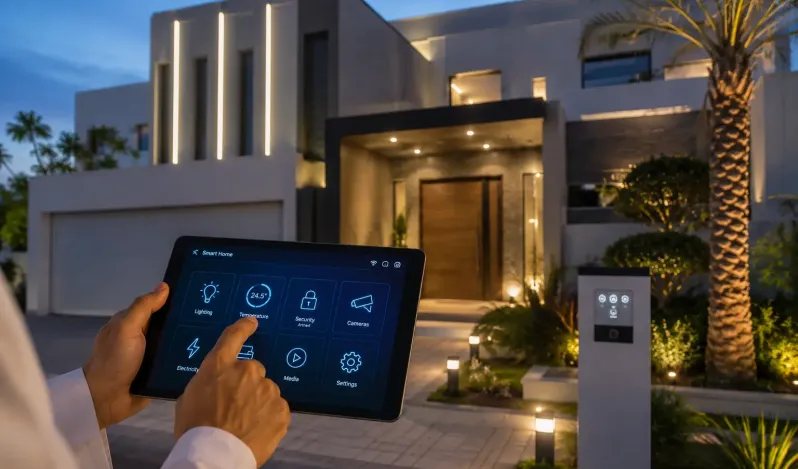


Muscat is home to three projects that are officially classified as sustainable smart cities: January Residences and Sarooj Oasis within Sultan Haitham City, and the Sustainable City in the Yiti area. All of them share an element that matters to investors more than any other description: the increasing demand for this type of project compared to traditional residential projects. This directly affects the speed of sales and the resale value later on. This article explains what specifically makes these projects an investment with increasing value, not just residential units with additional environmental features.
What makes a real estate project a truly sustainable smart city?
A sustainable smart city is classified based on technological and environmental elements such as digital facility management (monitoring energy and water consumption electronically), full or partial reliance on renewable energy sources, and urban design that reduces dependence on private cars through interconnected walkways and green streets. These combined elements distinguish a project like January Residences or the Sustainable City from a traditional residential project in the same price category, and this difference later justifies the difference in demand for it.
Why do property values in smart cities rise faster than in traditional projects?
The increase in value in these projects is driven by three interrelated factors: the growing global demand from a specific group of buyers looking for this type of housing, which is still in its early stages in Muscat compared to other markets, giving early investors a time advantage; secondly, the limited current supply—while Muscat has dozens of traditional residential projects, there are only a limited number of projects actually classified as sustainable smart cities, which reduces price competition for units when reselling; thirdly, the lower operating costs for the owner or tenant (lower energy bills thanks to renewable sources), which increases the unit's attractiveness to potential tenants, thus supporting both rental yield stability and unit value.
January Residences: The first smart city in the Sultanate of Oman
January Residences Project developed by Idraak Real Estate in Sultan Haitham City, which is the first smart and sustainable city in Oman, consists of six iconic towers interconnected by green streets and wide walkways that reduce reliance on cars within the project. All units are delivered semi-furnished with basic kitchen appliances, with the option of full luxury furnishing for an additional 100 OMR per square meter. Prices start from 45,000 OMR, making it one of the lowest entry points among smart city projects in Muscat today.
Sarooj Oasis: A model of sustainable smart cities
Sarooj Oasis Project is specifically designed to be a model for sustainable smart cities, and includes 250 diverse residential units: 90 standalone villas, 60 attached villas, 50 townhouses, and 50 apartments, overlooking the project's central park. This variety of units distinguishes it from January Residences, which focuses on tower units, making it a broader option for those seeking a mix of villas and apartments within a single smart project. Prices start from 49,000 OMR.
The Sustainable City in Yiti: Net zero emissions by 2040
Unlike January Residences and Sarooj Oasis, which are located within Sultan Haitham City, The Sustainable City Project is in the coastal Yiti area and aims to achieve net zero carbon emissions by 2040, relying 100% on renewable energy. It features luxury apartments within the Plaza complex, as well as integrated facilities including a health center, school, nursery, 4-star hotel, 5-star resort, and an equestrian center. The first phase of the project has sold out completely, which is one of the strongest indicators of real demand for this type of project, while the second phase is currently available with prices starting from 80,000 OMR.
January Residences and Sarooj Oasis target tenants and buyers seeking permanent family housing with a lower entry budget within a fully serviced city, while the Sustainable City in Yiti targets buyers looking for a coastal tourist location in addition to the environmental aspect, with a higher entry budget. Both options share the same logic of value appreciation linked to limited supply in this category, but the usage horizon (permanent housing versus tourist investment) fundamentally differs between the two groups.
Criteria for evaluating the investment value of a smart city project before purchase
- Actual sales rate so far: The complete sell-out of the first phase, as happened in the Sustainable City, is a direct indicator of real—not hypothetical—demand.
- Clarity of declared technical and environmental features: Ensuring that smartness and sustainability are linked to actual documented systems (renewable energy, digital management), not just general marketing slogans.
- Project location in relation to intended use: A project within an inland residential city suits family use, while a coastal project suits tourism investment use.
- Project phase at the time of purchase: Entering an early phase of a limited-supply smart city project usually provides a greater margin for value appreciation upon completion compared to entering at later stages.
January Residences, Sarooj Oasis, and the Sustainable City currently represent exceptional options for those seeking real estate investment with a clear logic of value appreciation, not just an attractive environmental label. The best choice among them depends on the intended use (permanent family housing or coastal tourism investment) and the available budget.
The Imtilak Global team monitors the actual sales rates in these three projects and others, and knows which phase of each project still offers the greatest value appreciation margin for early investors. If you want to enter this type of investment before prices rise as sales progress, you can contact our consultants to review the units currently available in these three projects.
Frequently Asked Questions
What is the difference between January Residences and Sarooj Oasis?
January Residences consists of six residential towers with prices starting from 45,000 OMR, while Sarooj Oasis offers a wider mix of units (villas, townhouses, and apartments) with prices starting from 49,000 OMR. Both are within Sultan Haitham City.
Why are smart city properties a better investment than traditional properties?
The limited number of projects actually classified as sustainable smart cities in Muscat, compared to the large number of traditional projects, reduces price competition on resale and supports value appreciation as demand for this type of housing increases.
Is the Sustainable City in Yiti more expensive than the smart city projects in Sultan Haitham City?
Yes, prices in the Sustainable City start from 80,000 OMR compared to 45,000–49,000 OMR in January Residences and Sarooj Oasis. The difference is due to its coastal location in the Yiti tourist area.
common.blog.share_article


common.blog.share_article