


A complete guide to buying property in the Sultanate of Oman remotely
2026-08-24
1,054 Views
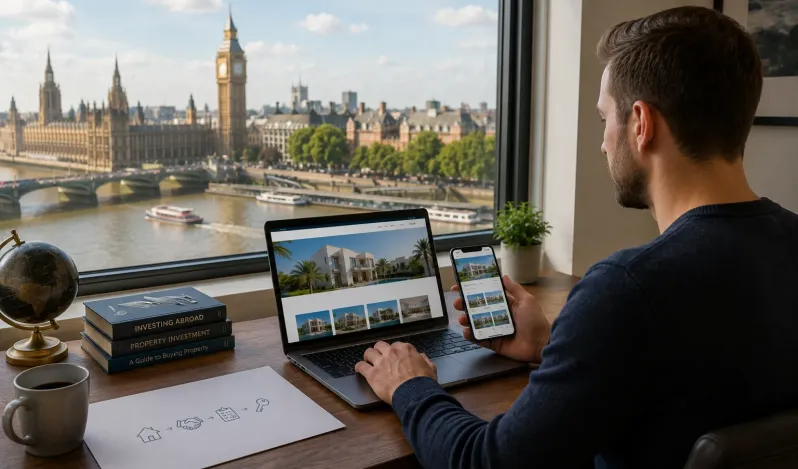


Many people who considered buying property in the Sultanate of Oman have never visited it before, and assumed this would be a real obstacle to making a purchase decision. In reality, it is possible to complete the process of buying property in Oman entirely from abroad, starting from the initial verification of the project all the way to receiving the title deed, without the need for personal presence at any stage. This guide explains each step in practical detail, specifying exactly what documents are required and how each stage actually proceeds.
- Is it really possible to buy property in Oman without visiting?
- Step One: Verifying the credibility of the project and developer remotely
- Viewing the property without travel: virtual tours and aerial photography
- Signing the purchase contract by official power of attorney from your country
- International money transfer and opening a bank account in Oman
- Remotely tracking construction progress until handover
- Receiving the property and registering ownership without personal presence
- After purchase: real estate residency and remote property management
- Frequently Asked Questions
Is it really possible to buy property in Oman without visiting?
Yes, and this is actually a common buying pattern among foreign investors in Oman, especially those coming from countries without direct, easy flights, or whose circumstances do not allow them to travel before making a decision. This pattern relies on three main pillars: a transparent government legal framework that does not require personal presence for most procedures (registration is done at the Ministry of Housing and Urban Planning or the Land Registry Department based on certified documents, with no mandatory presence), digital tools for viewing that replace field visits, and a trusted local real estate agent who represents the buyer's interests at every step requiring physical presence inside the Sultanate.
Step One: Verifying the credibility of the project and developer remotely
This step specifically determines the safety of everything that follows, and practically includes:
Verifying the identity of the developer: Request their full official name and check whether it is a government entity such as Omran Company or the Ministry of Housing and Urban Planning, or a private developer, and whether there is a public record of previous projects they have actually delivered.
Requesting official project documents: The master plan, building permit, and project registration certificate with the competent authority. Any serious developer will not hesitate to provide these documents upon direct request.
Verifying the legal classification of the area: Is it within freehold areas (ITC), a future city, or a qualified complex? This classification determines your full rights as a foreign owner and can be verified by matching the project name against the lists of officially licensed areas.
Asking specific, not general, questions to the sales team: Instead of "Is the project good?", ask "Who is the developer exactly? What percentage of units have been sold so far? What is the official handover date written in the contract?" Evasive or generic answers to specific questions are a warning sign.
Independent research about the project: Search for the project and developer names in independent sources (local news, official government websites) to ensure what you are told matches publicly available information.
Read also: Law of Foreign Real Estate Ownership in Oman
Viewing the property without travel: virtual tours and aerial photography
Visual inspection no longer requires personal presence, and includes several practical tools:
Live video call with the agent or sales team: A live tour via phone or video call app inside the construction site or finished unit, allowing you to ask immediate questions and direct the camera to see exactly what you want, not just pre-prepared shots.
Regular aerial video clips (by drones): Some major projects provide these as part of their regular updates, showing the actual progress of the construction site from a comprehensive angle that is hard to fake.
Recent dated actual photos: Request photos with a clear date, not general marketing images that may belong to an earlier phase of the project.
Accurate unit floor plan: Instead of relying on a general description, request the architectural plan for the specific unit you intend to buy, specifying the direction of balconies and windows if the view is important to you.
Comparing marketing materials with technical documents: Promotional images always show the best possible angle; the plans and technical specifications written in the contract are the legally binding reference, not the photo.
Signing the purchase contract by official power of attorney from your country
Omani law does not require the buyer's personal presence to sign the property purchase contract. The steps of this process are practically:
Determining the type of power of attorney required: A specific power of attorney limited to this property transaction is usually best, not a general power of attorney that might grant the agent broader authority than necessary.
Accurately specifying powers within the text of the power of attorney: Signing the sale contract, paying installments, receiving documents, and following up registration—each power should be explicitly mentioned in the text of the power of attorney.
Notarizing the power of attorney in the buyer's country: Usually before a notary public or certified official, then attested by the Ministry of Foreign Affairs in the buyer's country.
Attesting the power of attorney at the Omani embassy or consulate: An additional step that grants the power of attorney full legal recognition for use inside Oman.
Certified translation if necessary: If the power of attorney is in a language other than Arabic or English, a certified translation is usually required to accompany it.
Carefully choosing the agent: They can be a lawyer, a real estate consultant from a trusted agency, or a fully trusted individual, as they will act on your behalf in a major financial transaction.
International money transfer and opening a bank account in Oman
A foreign buyer can handle financial transactions remotely through two paths:
Opening a personal bank account in Oman as a non-resident: This usually requires a valid passport, proof of address in the current country of residence (utility bill or lease contract), and sometimes a reference letter from a bank in the country of residence. Some banks allow you to start this process remotely before completing it later.
Direct transfer to the developer's account: Instead of opening a personal account, you can transfer payments directly via international bank transfer (SWIFT) to the developer's account specified in the contract, which is the most common and widely used route in off-plan property purchases in particular.
Keeping proof of every transfer: Bank transfer receipts (SWIFT Confirmation) are your legal proof for every payment you make, and should be saved and matched against the payment schedule in the contract.
Paying attention to the source of funds: Banks, especially for large transfers, may request clarification of the source of funds as part of standard anti-money laundering procedures worldwide. This is a routine procedure and not a concern if your funds are well documented.
Remotely tracking construction progress until handover
For those buying off-plan property, the journey of not needing to be present continues after signing as well, through:
Requesting regular documented updates from the developer: Specify in advance whether the updates are monthly or quarterly, and whether they include actual photos or just written reports.
Linking payments to actual construction milestones: In good contracts, each payment due is linked to a specific construction stage (such as completion of the concrete structure), and this linkage itself is an indirect but strong indicator of actual progress.
Using an agent to visit the site on your behalf: Instead of relying solely on your direct communication with the developer, a local real estate agent can visit the site regularly and provide you with an independent, unbiased assessment of construction progress.
Receiving the property and registering ownership without personal presence
When construction is complete, the handover and final registration procedures proceed as follows:
Inspecting the unit on your behalf: Your authorized agent inspects the unit in person and verifies that it matches the specifications agreed upon in the contract (area, finishing, appliances if any).
Recording any remarks before final signing: If there are differences from what was agreed, the agent documents them in writing before signing off on final receipt of the unit.
Signing the handover documents: Using the same power of attorney as before, or an additional power of attorney specifically for this stage if needed.
Completing registration at the Ministry of Housing: Submitting all required documents (initial title deed, proof of full payment, ID) to issue the final title deed in the owner's name.
Sending a certified copy of the title deed to the owner: The final step confirming the deal is fully completed, with the original kept according to the system in place at the registering authority.
After purchase: real estate residency and remote property management
Those who buy property for real estate residency can complete their application after handover through their agent or by personal presence later, depending on the requirements of the competent authority. Those buying for rental investment can use a property management company or trusted agent to handle: marketing the unit for rent, collecting monthly rent and transferring it internationally to the owner, and following up on regular and urgent maintenance, without the owner needing to reside permanently in the Sultanate at any stage.
Buying property in Oman without visiting is truly possible and fully regulated by law, from initial verification to receiving the title deed, through a clear path: documented verification, digital viewing, certified official power of attorney, and documented financial transfer with receipts. The key is to use a trusted real estate agent who represents your interests at every step requiring physical presence inside the Sultanate.
Imtilak Global experts specialize in assisting investors who have never visited Oman before, step by step from initial verification to receiving the title deed. Talk to our real estate consultants to start your property purchase journey in Oman without the need to travel.
Frequently Asked Questions
Can any foreigner buy property in Oman without ever visiting?
Yes, procedurally, as long as the verification steps, official power of attorney, and financial transfer are completed correctly, with no requirement for personal presence to finalize the deal.
How long does it take to notarize and fully attest the power of attorney?
It varies depending on the buyer's country and its local procedures, but it usually takes from a week to several weeks between local notarization and consular attestation, so it is advisable to arrange this step early, not when the signing date approaches.
What is the most important step not to neglect when buying remotely?
Verifying the credibility of the project and developer before any financial commitment, as this step is the foundation on which the rest of the remote purchase process is confidently built.
Is the cost of buying remotely higher than buying in person?
There is no essential difference in the cost of the property itself, and the only possible extra cost is the fee for notarizing and attesting the legal power of attorney.
Do you like this topic? You can share it with your friends now!


Do you like this topic? You can share it with your friends now!
More From Imtilak

Investment in Oman
Apartment rentals in Salalah during the autumn season and how to prepare for the annual peak



Investment in Oman
The top 7 freehold projects for Gulf nationals in the Sultanate of Oman 2026

Investment in Oman
The rise in real estate prices in the Sultanate of Oman by 22.7%: What does it mean for investors and buyers?