Comprehensive Guide to the Sultanate of Oman
2026-04-20
20,576 common.blog.views


Historical Overview of the Sultanate of Oman
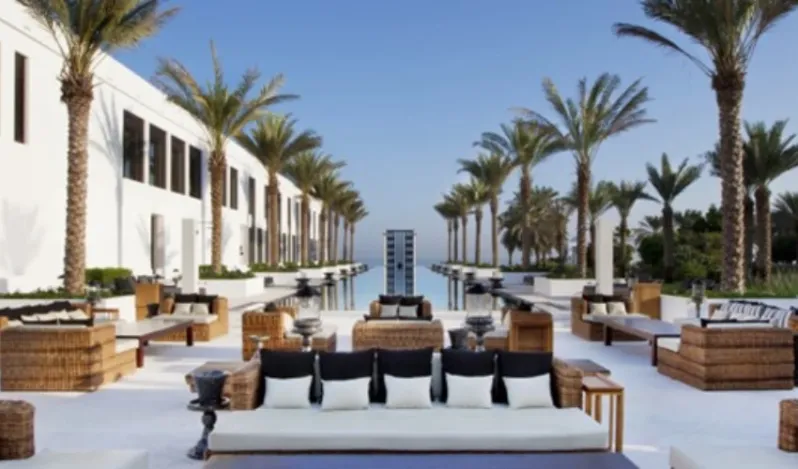
The Sultanate of Oman boasts one of the oldest independent states in the Arab world, with a history spanning over 5000 years. Oman was home to ancient civilizations such as the Magan and Indus Valley civilizations and witnessed significant prosperity during the early Islamic periods. The Portuguese occupied parts of Oman in the 16th century, but the country regained independence in 1650 under the leadership of Imam Nasser bin Murshid al-Ya'arubi, the founder of the Ya'arubi state.
In the 19th century, Oman came under British influence but maintained its political independence. In 1970, Sultan Qaboos bin Said ascended to power and led Oman into modernization and comprehensive development, transforming the country into a modern state with advanced infrastructure and strong international relations.
Location of Oman and Neighboring Countries
The Sultanate of Oman is strategically located in the southeastern corner of the Arabian Peninsula, offering a unique vantage point on some of the world's most critical maritime routes. It is bordered by Saudi Arabia to the west, with a border length of approximately 676 kilometers, the United Arab Emirates to the northwest, with a border length of around 410 kilometers, and Yemen to the southwest, with a border length of about 288 kilometers.
Oman is flanked by the Gulf of Oman to the northeast and the Arabian Sea to the southeast, making it surrounded by water on three sides. This geographical position provides Oman with a strategic advantage in maritime trade and security, along with a diverse landscape ranging from mountains and beaches to deserts.
Major Cities and Governorates of Oman
Oman is home to a variety of cities and governorates, each reflecting the country's rich history, diverse culture, and geographical uniqueness, from stunning coastlines to majestic mountains and vast deserts.
- Muscat: The political and economic capital of Oman, Muscat city is a cultural and commercial hub that features numerous historical landmarks like the Al Alam Palace and the Sultan Qaboos Grand Mosque, alongside modern facilities such as malls, commercial centers, and luxury hotels.
- Salalah: Located in the Dhofar Governorate, Salalah is famous for its monsoon season (Khareef), attracting tourists worldwide due to its mild climate and lush green landscapes during this period. Salalah city is a major tourist destination featuring natural attractions like Al Mughsail Beach and the Qara Mountains.
- Nizwa: Known as the cultural capital of Oman, Nizwa is home to many forts and traditional markets, such as the Nizwa Fort and Nizwa Souq. The city has a rich history and plays a vital role as a center of learning and trade.
- Sohar: Historically a major trading hub, Sohar is now a key port city contributing significantly to Oman's economy. The city is characterized by its industrial development and modern amenities.
- Sur: Renowned for its traditional shipbuilding (dhow), Sur is one of the key coastal cities in Oman. It features historical and natural attractions such as Sur Castle and the Quriyat Beach.
Climate
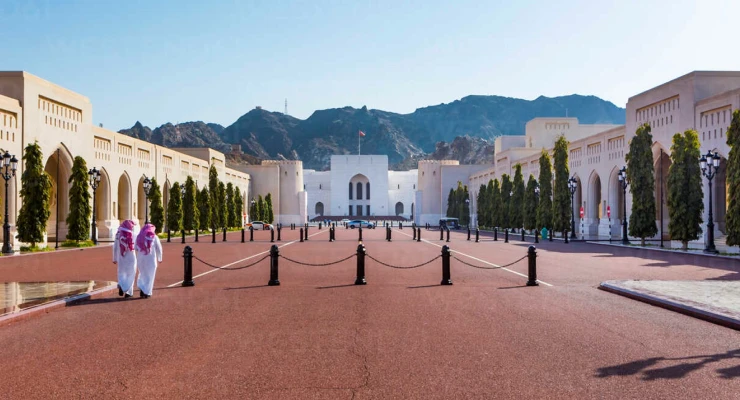
Oman's climate varies between its coastal and interior regions, offering a unique climatic diversity. Coastal areas experience high temperatures during summer, reaching up to 45°C with high humidity, while winter is more moderate, with temperatures ranging from 20°C to 25°C.
Mountainous regions like the Hajar Mountains enjoy cooler temperatures and lower humidity, making them an ideal retreat from the summer heat. The Dhofar Governorate, especially Salalah, enjoys a mild climate during autumn due to the southwest monsoon winds, making it a popular destination for those seeking a cooler environment and lush greenery.
General Information
|
Element
|
Details
|
|
Population
|
Approximately 4.5 million
|
|
Area
|
309,500 square kilometers
|
|
Official Language
|
Arabic
|
|
Religion
|
Islam
|
|
Government System
|
Absolute Monarchy
|
|
Official Currency
|
Omani Rial
|
|
Current President
|
Sultan Haitham bin Tariq
|
|
Capital
|
Muscat
|
Infrastructure in Oman
Oman has witnessed significant development in its infrastructure, driven by government efforts to enhance comprehensive development. The country boasts an extensive network of roads connecting major cities and towns, as well as modern international airports like Muscat International Airport and Salalah Airport. Oman also has important ports such as Port of Salalah and Port of Sohar, strengthening its commercial and economic roles.
The healthcare sector has seen substantial progress with the construction of modern hospitals and advanced medical centers throughout the country. Education is also experiencing a qualitative leap with the establishment of universities, colleges, and modern schools that meet international standards.
Cultural Heritage
Oman is rich in cultural heritage that spans thousands of years. Traditional arts like Al-Razha and Al-Azi are integral parts of Omani cultural identity, reflecting the values and traditions of the society. The Sultanate is also famous for its traditional crafts such as dagger making, silver jewelry, and textiles.
Numerous cultural and artistic festivals are held annually, such as the Muscat Festival and the Salalah Tourism Festival, showcasing traditional arts, local cuisine, and handicrafts. Traditional attire, like the dishdasha for men and the hijab for women, remains an important aspect of Omani cultural identity and is prominently displayed during national and religious events.
Economy in Oman
Oman's economy heavily relies on oil and gas, but it has been diversifying in recent years with a focus on non-oil sectors such as tourism, industry, and mining. Through Vision 2040, Oman aims to achieve sustainable development and diversify income sources. Agriculture and fishing also play a significant role in the Omani economy, especially in rural areas.
The services sector has seen notable growth, including banking, finance, and insurance. The Omani government encourages foreign investment and offers significant incentives to attract investors to various economic projects.
Read also: Advantages of Real Estate Investment in Oman.
Tourism
Oman offers a plethora of tourism attractions, from beautiful beaches and towering mountains to vast deserts. The Sultanate provides unique tourist experiences such as visiting ancient forts and castles, enjoying water sports in Salalah and Muscat, and embarking on desert safaris in the Wahiba Sands.
Muscat offers a blend of history and modernity with attractions like the Sultan Qaboos Grand Mosque and Mutrah Souq. Salalah is a major tourist draw due to its mild climate during autumn and natural attractions like the Darbat Waterfalls. Oman's mountains provide excellent opportunities for climbing and hiking, while its beaches are perfect for diving and surfing.
Start Your Journey of Living in Oman by Owning Property with Imtilak Global
If you are considering moving to Oman, Imtilak Global can help you find the perfect property. Whether you are looking for a luxurious home in Muscat or a comfortable apartment in Salalah, we are here to provide you with the necessary support.
Benefit from our extensive expertise in the Omani real estate market and start your journey of living in Oman with confidence and comfort through Imtilak Global. We offer a wide range of real estate options to meet all your needs, and we strive to make the property buying experience in Oman as smooth and easy as possible.
common.blog.share_article


common.blog.share_article